Team 3
Biology and Physiopathology of the Spinal Cord

Understanding spinal cord function and repair across scales

Our team investigates the biology and pathophysiology of the spinal cord, from the neuromuscular junction to spinal motor circuits.
We study the mechanisms underlying neurodegeneration and neural plasticity, with a particular focus on motor neuron function and excitability

Our research also explores strategies to promote neural repair after injury, including the modulation of the spinal microenvironment and the enhancement of neurite growth.
Building on recent work, we are developing new research directions focusing on the role of glial cells in spinal cord injury and amyotrophic lateral sclerosis (ALS).

Located within a highly collaborative environment, we combine expertise in electrophysiology, advanced imaging, and behavioral analysis to better understand spinal cord function and recovery.

Research areas : Spinal cord injury – Amyotrophic lateral sclerosis (ALS) – Neural plasticity – Glial cells – Motor neuron physiology – Neuromodulation

Spinal motoneuron excitability is homeostatically regulated through β-adrenergic neuromodulation in wild-type and presymptomatic SOD1 mice.

Antonucci S, et al.

Progress in Neurobiology | 2026

Motoneurons Inhibitory Synapses Homeostatically Respond to Neuronal Activity and Modulate Amyotrophic Lateral Sclerosis Pathogenesis.

Halablab K, et al.

The Journal of Neuroscience | 2026

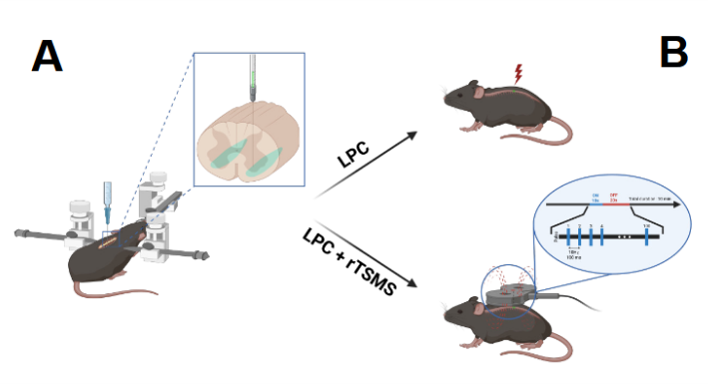
Repetitive Trans-spinal magnetic stimulation Promotes Repair in Inflammatory Spinal Cord Injury Through Sex-Dependent Immune Modulation

Semprez F, et al.

The Journal of Neuroinflammation | 2026

Prolonged Repetitive Trans-Spinal Magnetic Stimulation Promotes Superior Functional Recovery After Severe Spinal Cord Injury in Rats

Garrido E, et al.

The Journal of Neurotrauma | 2026

Decoding Wetting Behavior: Capillary Rise Experiments with Amphiphilic Compounds and Theoretical Aspects

Hamraoui A, et al.

Langmuir | 2025

Spinal cord injury alters the therapeutic potential of olfactory ensheathing cells harvested in an autologous transplantation model

Delarue Q, et al.

Stem Cell Research & Therapy | 2025

The alpha7 nicotinic acetylcholine receptor mediates network dysfunction in a mouse model of local amyloid pathology

Koukouli F, et al.

Molecular Psychiatry | 2025

Renshaw cells, corelease and nicotinic receptors: The last journey in synaptic transmission

Lamotte d’Incamps B

Neuroscience | 2025

Involvement of the Endothelial N-Methyl-D-Aspartate Receptor on Vessel-Associated Positioning and Differentiation of Cortical Oligodendrocytes and on Motor Activity

Beranger A, et al.

The Journal of Neuroscience | 2025

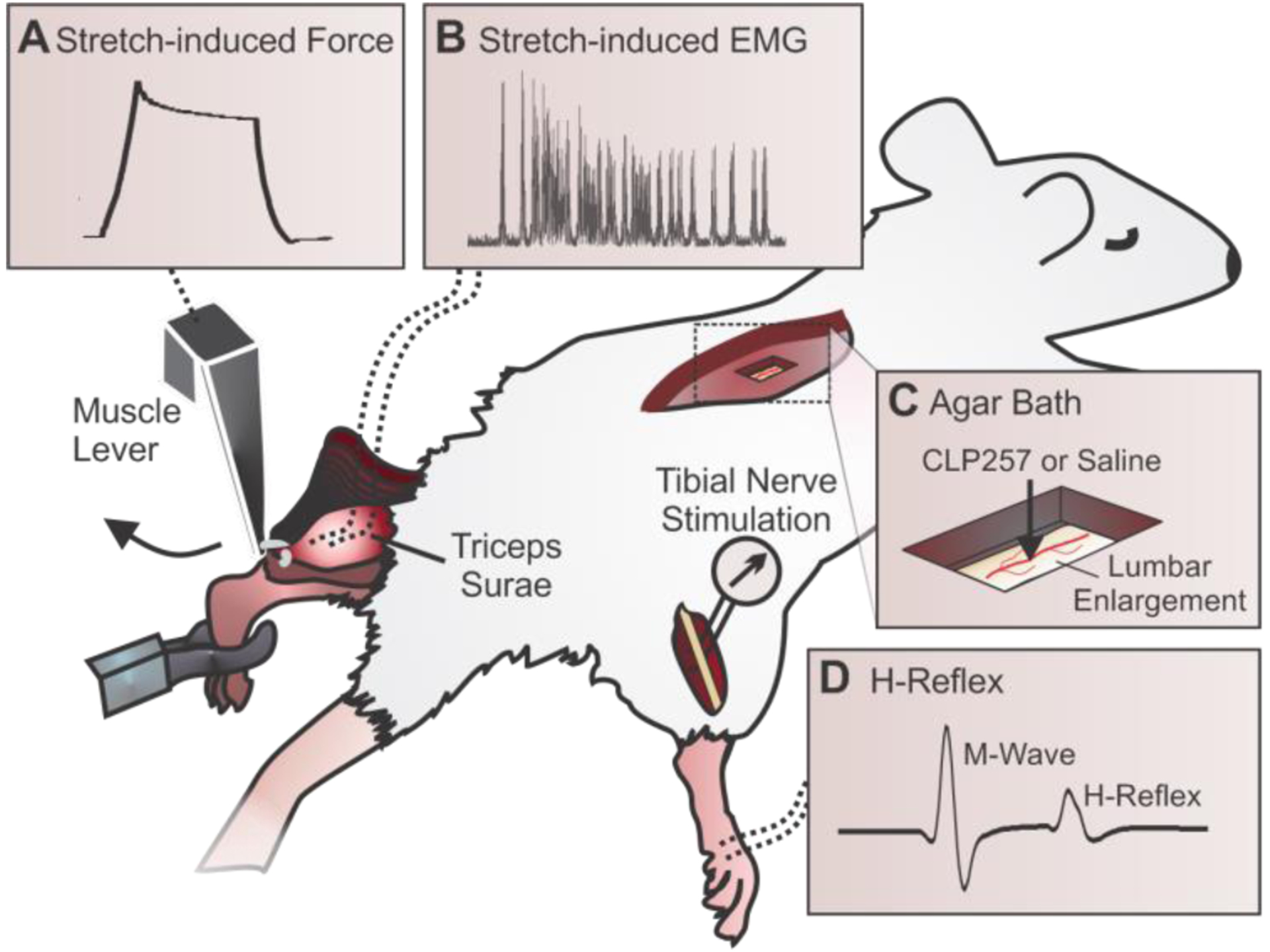
KCC2 enhancers normalize reflex responses and improve locomotor function after chronic spinal cord injury

Bilchak JN, et al.

The Journal of Physiology | 2025

Team leader

Members