Team 6
Synapses of
Affective Behaviors

Team description

From molecules to circuits: decoding the neural basis of emotion and aversion

Our team investigates how molecular mechanisms underlying the processing of inhibitory and excitatory inputs in neurons are integrated into neural circuits to shape emotional and affective behaviors.
We study the cellular and synaptic mechanisms that control neuronal firing and information processing, with a particular focus on non-synaptic and synaptic signaling pathways.

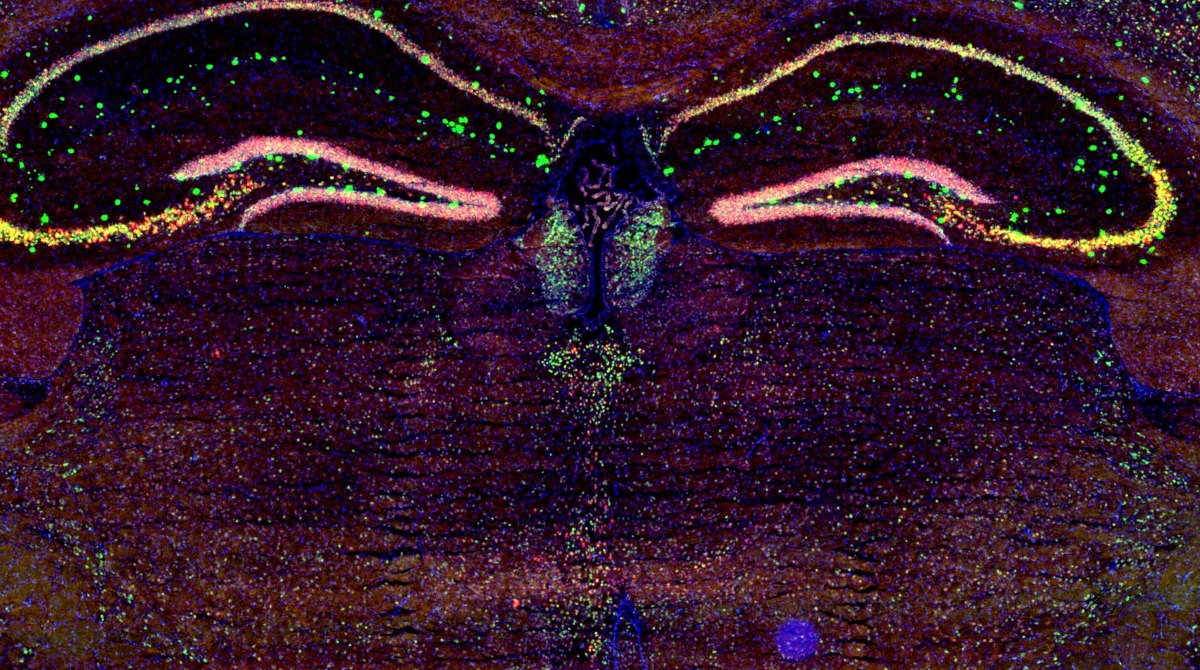
Our research focuses in particular on the intralaminar and midline thalamus and the medial habenula, key brain regions involved in attention, aversion, and state transitions such as wake and sleep.
We also explore how these circuits transform incoming signals at the single-neuron level to influence behavior.

Building on a bottom-up approach, we investigate how identified molecular actors shape circuit function and behavioral outcomes in vivo.

Research areas : Thalamic circuits – Medial habenula – Synaptic integration – Neural circuits of emotion – Optogenetics and chemogenetics – Behavior

Spinal motoneuron excitability is homeostatically regulated through β-adrenergic neuromodulation in wild-type and presymptomatic SOD1 mice.

Antonucci S, et al.

Progress in Neurobiology | 2026

Motoneurons Inhibitory Synapses Homeostatically Respond to Neuronal Activity and Modulate Amyotrophic Lateral Sclerosis Pathogenesis.

Halablab K, et al.

The Journal of Neuroscience | 2026

Repetitive Trans-spinal magnetic stimulation Promotes Repair in Inflammatory Spinal Cord Injury Through Sex-Dependent Immune Modulation

Semprez F, et al.

The Journal of Neuroinflammation | 2026

Prolonged Repetitive Trans-Spinal Magnetic Stimulation Promotes Superior Functional Recovery After Severe Spinal Cord Injury in Rats

Garrido E, et al.

The Journal of Neurotrauma | 2026

Decoding Wetting Behavior: Capillary Rise Experiments with Amphiphilic Compounds and Theoretical Aspects

Hamraoui A, et al.

Langmuir | 2025

Spinal cord injury alters the therapeutic potential of olfactory ensheathing cells harvested in an autologous transplantation model

Delarue Q, et al.

Stem Cell Research & Therapy | 2025

The alpha7 nicotinic acetylcholine receptor mediates network dysfunction in a mouse model of local amyloid pathology

Koukouli F, et al.

Molecular Psychiatry | 2025

Renshaw cells, corelease and nicotinic receptors: The last journey in synaptic transmission

Lamotte d’Incamps B

Neuroscience | 2025

Involvement of the Endothelial N-Methyl-D-Aspartate Receptor on Vessel-Associated Positioning and Differentiation of Cortical Oligodendrocytes and on Motor Activity

Beranger A, et al.

The Journal of Neuroscience | 2025

KCC2 enhancers normalize reflex responses and improve locomotor function after chronic spinal cord injury

Bilchak JN, et al.

The Journal of Physiology | 2025